Monday, 5 May 2014

Today in History - 5th May 2010 President Yar'Adua dies


Umaru Musa Yar'Adua was the President of Nigeria and the 13th Head of State (From  29 May 2007 till death ) He had previously served as governor of Katsina State in northern Nigeria from 29 May 1999 to 28 May 2007. In 2009, Yar'Adua left for Saudi Arabia to receive treatment for pericarditis. He returned to Nigeria in 2010, where he died on 5 May. 

Sunday, 4 May 2014

Idia


Queen Mother of Esigie, the ruler of Benin Kingdom in the early 1500s.  
Esigie created the political title Iyoba to include her in his administration . Idia has been described as a valiant warrior. She is credited with Esigie's successful conquest of the neighbouring Igala Kingdom. Her son built her a palace outside Benin and gave her territory over which to rule. In Bini oral tradition, Idia has several praise names,  such as "Idia ne ekonorhue" meaning "Idia, the womb of Orohue"

This Ivory carving of her face was adopted in 1977 as the emblem of the World Bank and African Festival of Arts and Culture

FOUR COPIES of the carving were taken from the private residence of Oba Ovoranmwen in 1897 by the British military force that invaded the capital of the Empire, Edo (now Benin City in Nigeria) during the "punitive expedition" and memories of the humiliation that the King suffered at the hands of the British (he was deposed and banished to Calabar) still evokes bitterness.

The carving is still the centrepiece of the African exhibition at the British Museum which attracts thousands of visitors each year. 

One of the other three copies of the carving is now in the Metropolitan Museum in New York, another is in a private collection in California and the fourth is in the hands of an anonymous British collector.

When the Nigerian military government at the time (headed by Olusegun Obasanjo), made a formal request for the carving's return . The British government bluntly refused, their reason..... The head of the conservation department at the Museum was of the opinion that "because of the condition of the object, it was unsafe to travel. The surface of the mask was cracked and it was thought that a sudden change in environment, from a cold climate to a suddenly hot one could worsen its state." 

Thursday, 1 May 2014

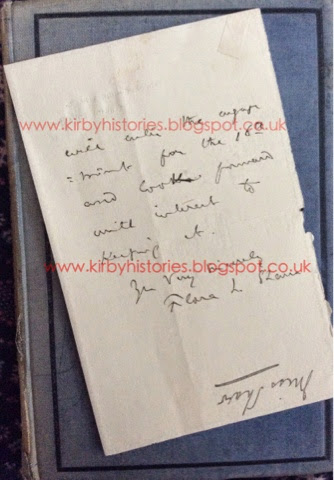
Thank you note written by Flora Shaw. February 1900

Flora Shaw was a British journalist. She is credited with having coined the name "Nigeria" (even though it had been in use way before) She married Sir Frederick Lugard in 1902 he was the first Governor-General of Nigeria.

Wednesday, 30 April 2014

Ulli Beier at an exhibition of works by African authors 1959


Ulli Beier, was a formidable proponent of modern African art and literature at a time when it received scant attention from the Western mainstream.

For most of his career Beier was a university lecturer, but unlike most academics he participated in and actively instigated many of the developments he wrote about. 
His attempts to promote both traditional and modern African arts led to the creation of Black Orpheus, the first African literary magazine in English, which he co-founded in 1957 and the Mbari Club, a watering hole for writers and artists in the Nigerian university city of Ibadan, which convened in 1961 with the involvement of Africa’s two literary giants: the Nobel Prize-winning dramatist Wole Soyinka and Chinua Achebe, author of the celebrated novel Things Fall Apart.

The Mbari Club became synonymous with the optimism and creative exuberance of Africa’s post-independence era. Fela Kuti made his debut as bandleader there, and it became a magnet for artists and writers from all over Africa, America and the Caribbean.


Gabriel Okara - Once Upon a Time


Once upon a time, son,
they used to laugh with their hearts
and laugh with their eyes:
but now they only laugh with their teeth,
while their ice-block-cold eyes
search behind my shadow.

There was a time indeed
they used to shake hands with their hearts:
but that’s gone, son.
Now they shake hands without hearts
while their left hands search
my empty pockets.

‘Feel at home!’ ‘Come again’:
they say, and when I come
again and feel
at home, once, twice,
there will be no thrice-
for then I find doors shut on me.

So I have learned many things, son.
I have learned to wear many faces
like dresses – homeface,
officeface, streetface, hostface,
cocktailface, with all their conforming smiles
like a fixed portrait smile.

And I have learned too
to laugh with only my teeth
and shake hands without my heart.
I have also learned to say,’Goodbye’,
when I mean ‘Good-riddance’:
to say ‘Glad to meet you’,
without being glad; and to say ‘It’s been
nice talking to you’, after being bored.

But believe me, son.
I want to be what I used to be
when I was like you. I want
to unlearn all these muting things.
Most of all, I want to relearn
how to laugh, for my laugh in the mirror
shows only my teeth like a snake’s bare fangs!

So show me, son,
how to laugh; show me how
I used to laugh and smile
once upon a time when I was like you.

Gabriel Okara

1960

Wednesday, 26 March 2014

Adire by S. Wenger and H. U. Beier.

Nigeria Magazine. 1957

"Pattern dyeing in Indigo is a technique known to several West African tribes, notably the Sarankole of French Guinea, the Tiv of Benue region and the Yoruba of Western Nigeria. 

Two entirely different techniques of pattern dyeing are practised by Yoruba women. The first method consists of sewing or tying the cloth together in certain places before dyeing. In this way patches of cloth will remain untouched by the indigo vat and will appear as a white pattern on the dark blue cloth. This is the original method as the Yoruba name batik indicates. "Adire" means literally: to take, to tie and dye.

The second method, which is called "adire eleko" is not older than 1910. It seems that it was first practiced in Lagos and Abeokuta . This method consists of painting a pattern in starch cloth. The starch acts as a resist to the dye, and if after dyeing the cloth is washed, the pattern again appears in white on an almost black background. 
The starch used for painting these patterns is cassava flour and it can be obtained in the market under the name of "lafun". The "lafun" must be boiled together with alum to make a thick pudding. If no alum were added, the starch would dissolve in the indigo vat. The boiled starch is now called "Eko" and will be wrapped in "Ketemfe" leaves. In this way it will keep fresh for a couple of weeks, provided that the leaves are occasionally renewed.

Before applying the "eko" to it the cloth must not be washed. The design is always drawn on the starchy side.
To paint the pattern on cloth, a stencil may be used. Zinc or lead sheets are normally used. 
One of the most famous stencil pattern is the coronation "adire", of which there are many versions.
The drawing of the design is a far more laborious process when no stencil is used. The result, however, can be more alive and more attractive. 
Usually a woman employs a number of children who help her in drawing the design. They are trained in this way to become "aladire".

 Each "adire eleko" has a special name, and each design on it also has a name. It is interesting to discover, that what seems to the stranger's eye to be an abstract pattern, is really a representative drawing . Two of the most attractive "adire" are "eiyepe" and " ibadandun".

"Eiyepe" means " All birds are here" . The various patterns on this cloth are called as follows:

Top line : Oni....Crocodile
Second line: Tadi reke.... A dance in which the dancer bends down low
Third line: Alangba....Lizard
Fourth line: Oga .....Chameleon
Fifth Line: Eiye Alapa... Bird with wings
Sixth line : Eiye rubutu.....A stout bird
Bottom Line: Oni.....Crocodile 

"Ibadandun", which can be roughly translated as " we enjoy Ibadan" is an even more complex "adire". Each line has got four distinct patterns, which are then repeated again on the second half of the cloth. Here are the names of the pattern:

Top line, left to right:

Pele oyo ... A certain facial mark common in parts of Oyo
Sokoto.. Yoruba trousers
Eiye.. Bird

Ma fowo jepa ...." Do not spend money on eating ground nuts"

The four patterns are then repeated on the right half of the cloth.

Second line, left to right: 

Eiye alapa... A bird with wings 
Gilasi......the Yoruba version of the English word "glass"
Aburanda ...the Yoruba version of the English word "Umbrella"
Oke mapo..... Mapo hill

The four patterns are then side of the cloth

Third line, left to right:

Oke mapo... Mapo hill
Waka...a Mohammedan writing tablet
Opon iro...... Writing slate
Waya......Yoruba version of the English word "wire"

Fourth line, left to right:

Ogede .... Plantain 
Eiye ogongo ....Ostrich  
Ejo ...... Snake
Igi ..... Tree

Fifth line,left to right:

Opon iro..... Writing slate
Ibo......name given to certain types of embroidery found on men's gowns
Eiye abuke .... Hunchback bird
Shenge .... Another type of Adire

Sixth line, left to right.
Oke mapo..... Mapo hill
Aburanda ......Umbrella
Apamowo .....Handbag
Ogede were .....Small banana

Bottom line, left to right

Apamowo.... Handbag
Sokoto ....Yoruba trousers
Eiye ogongo ....... Ostrich 
Waya .....Wire.

All patterns are repeated "

Friday, 14 March 2014

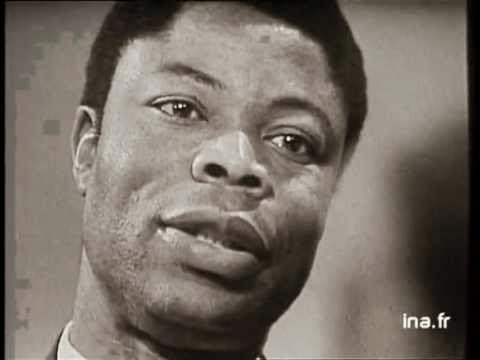
Ambassador Ralph Uwechue dies at 80.

Nigeria’s first envoy to France in 1966 (at the age of 33) and Ex-Ohanaeze President, Ambassador Ralph Uwechue has died. May he rest in perfect peace. Picture.www. Ina. fr 1970