Sunday, 22 September 2013

The last Interview Major Chukwuma Kaduna Nzeogwu gave in April 1967

Ejindu: I am glad to meet you, Sir. How would you feel if you knew that you are being regarded as a hero?

Nzeogwu: Very pleased naturally. But the truth is that I am not a hero. If there was any famous Major Nzeogwu, I have never heard of him

.Ejindu: It is rumoured that you have just finished writing a book, what is it like?

Nzeogwu: Good gracious! Ninety-nine per cent of all the stories you hear in this country are false. I have not written any book because there was nothing to write about. You can only write about a finished job. It would have been a useful means of warding off boredom though, but one did not do it for the fear that the authorities might seize the papers. However I had enough time to make detailed notes on what happened, and one might use them if in future there was any need to write something.

Ejindu: Before you went into prison, the cloud was so clear above this country that one could see very far into the future. Now that you are out, what do you see ?

Nzeogwu: A job very badly done. If I may borrow your metaphor, the atmosphere is admittedly somewhat cloudy. But I don't think there will be rain. Indeed if you look steadily up you will find that the sun is not yet set and might still peep through. The trouble is that people generally can't tell which is a rain cloud and which is not, and as a result they tend to be confused. As you know there is too much bitterness at present in the country, and in the past people had imagined that they could conveniently do without one another. But the bitterness will clear in the end and they will find that they are not as self-reliant as they had thought. And they will long to be together.The .same applies to the Northerners. It may take ten or fifteen years for them to come together again but there is no doubt, as far as I can see, that they will. You see, in this world of imperfection, it is sometimes very difficult to capture the ideal. But we can, at Ieast start with the second best.

Ejindu: What is the second best?

Nzeogwu: A Confederation.

Ejindu: Before I come back to that, may 1 take you back to January, 1966. What exactly happened at Nassarawa (the premier's residence at Kaduna) on the night of the 14th?

Nzeogwu: No, no, no; don't ask me anything about that, I don't want to remember it.

Ejindu: All right. A lot has been talked and written about the January coup. But how tribalistic was it really in conception and execution?

Nzeogwu: In the North, no. In the South, yes. We were five in number, and initially we knew quite clearly what we wanted to do. We had a short list of people who were either undesirable for the future progress of the country or who by their positions at the time had to be sacrificed for peace and stability. Tribal considerations were completely out of our minds at this stage. But we had a set-back in the execution. Both of us in the North (himself and Major T. C. Onwuatuegwu) did our best. But the other three who were stationed in the South failed because of incompetence and misguided considerations in the eleventh hour. The most senior among them (possibly Major Emmanuel Ifeajuna) was in charge of a whole brigade and had all the excuse and opportunity in the world to mobilize his troops anywhere, anyhow and any time. He did it badly. In Lagos, even allowing for one or two genuine mistakes, the job was badly done. The Mid-West was never a big problem. But in the East, our major target, nothing practically was done. He and the others let us down.

Ejindu: You must have anticipated that Gen. Ironsi would let you down in the end. Why did you surrender to him the way you did?

Nzeogwu: I was being sensible. The last thing we desired was unnecessary waste of life. If I had stuck to my guns there would have been a civil war, and as the official head of the Army, he would have split the loyalty of my men. Again, you must remember that the British and other foreigners were standing by to help him. Our purpose was to change our country and make it a place we could be proud to call our home, not to wage war.

Ejindu: It has been said that Gen. Ironsi set out to complete your job for you. Was there anything you did not like in his administration ?

Nzeogwu: Yes, everything. First he chose the wrong advisers for the work he halfheartedly set out to do. Most of them were either mediocre or absolutely unintelligent. Secondly, he was tribalistic in the appointment of his governors. Thirdly the Decree 34 (which nullified the federal constitution and established a unitary government) was unnecessary, even silly. In fact .

Ejindu: But you wanted a unitary government ?

Nzeogwu: No. Not a unitary government as such. We wanted to see a strong centre. We wanted to cut the country to small pieces, making the centre inevitably strong. We did not want to toy with power, which was what he did.

Ejindu: Tell me, what do you think of him as a soldier?

Nzeogwu: I am afraid I cannot tell you that. But I will say that as a person he was very well liked and as the Supreme Commander, his orders were promptly carried out.

Ejindu: If he joined the Army as a gunner, he must have progressed as a military strategist?

Nzeogwu: Yes, if he had, he could have done so. But he actually joined the Army as a tally-clerk and was a clerk most of the time.

Ejindu: From the present chaos, what type of Nigeria do you envisage?

Nzeogwu: In the first place, secession will be ill-advised, indeed impossible. Even if the East fights a war of secession and wins, it still cannot secede. Personally, I don't like secession and if this country disintegrates, I shall pack up my things and go. In the present circumstances, confederation is the best answer as a temporary measure. In time, we shall have complete unity. Give this country a confederation and, believe me, in ten or fifteen years the young men will find it intolerable, and will get together to change it. And it is obvious we shall get a confederation or something near it. Nothing will stop that.

Ejindu: Do you think there will be any war?

Nzeogwu: No. Nobody wants to fight. The East which is best equipped and best prepared for war, does not want to attack anybody. The North cannot fight. And Lagos cannot fight now. If they had attacked the East in August or September, they would have had a walk-over. Today, I think they will be ill-advised to try.

Ejindu: An Englishman said to me the other day that the best thing Ojukwu can do is to take over Lagos. Do you think he can do it even if he wanted to?

Nzeogwu: Yes, I think the East is strong enough to do it if they want to. But it will serve no useful purpose. It can only serve to destroy life and property. You see, the effective power does not lie in Lagos but in Kaduna, and if you remove Gowon somebody else will take his place. If you capture the South against the North, all you can achieve is civil war, disintegration and border clash.

Source: Crisis and Conflict in Nigeria, January1966 - July 1967. A. H. M. Kirk-Greene.Oxford Univeristy Press, 1971


Thursday, 19 September 2013

Kings College, Lagos is 104!

 
King’s School (as it was then called) came into being by an act of British parliament on the 20th of September 1909, with Mr Lomax as its first principle.
The school opened with 10 pioneer students which included J.C. Vaughan, Isaac Ladipo Oluwole, Frank Macaulay, Herbert Mills (from the Gold Coast), O.A. Omololu and Moses King. Oluwole was the first senior prefect of the school.

In 1914, Sir Fredrick Luguard, the Governor General of Nigeria described Kings College, Lagos in a white paper as " the leading school in the colony as well as the premier school"

Happy anniversary KC! 

(Picture: Kings College c1909)

Sunday, 1 September 2013

August 23, 1963. The First Two Way Call Between Heads Of State Via Satellite Was Made


50 years ago (Friday August 23, 1963) the first two way call between Heads of State via satellite was made. It was between American President John Kennedy and Nigerian Prime Minister Tafawa Balewa this real time interaction and conversation via satellite by Heads of State symbolized the beginning of a technological revolution across the globe through space applications.

In the telephone conversation, Kennedy and Balewa traded pleasantries, briefly mentioned the nuclear weapons text ban treaty, signed that year and talked about a boxing match in which Nigerian middle weight boxer Dick Tiger had retained his title against an American. The symbolic phone call lasted two minutes and went like this:

PRESIDENT KENNEDY : Prime Minister?

PRIME MINISTER: Yes

PRESIDENT KENNEDY: It is a great pleasure to talk to you from the White House. We send our very best wishes to your people and to you.

PRIME MINISTER: Thank you, Mr. President.

PRESIDENT KENNEDY: I hope that this is the beginning of much closer communication between Nigeria and the United States and indeed between the whole continent of Africa and our continent, our hemisphere. I think that this can be a very important means of providing for closer understanding among our people and also of course, among the people of Africa.
We send you particularly, Prime Minister, our best wishes remembering your visit here to the United States. I also appreciate the wire you sent me in early August in regard to the best ban treaty. I think that what we are doing today shows what can be done through the peaceful use of Space.

PRIME MINISTER: We congratulate you heartily Mr President for this very big achievement.

PRESIDENT KENNEDY: I hope we will be seeing you back in the United States and that all goes well for your country and your people.

PRIME MINISTER: Thank you.

PRESIDENT KENNEDY: Very good wishes Prime Minister and we look forward to having Dick Tiger come over here.

PRIME MINISTER:  It was indeed a very great day for us when Dick Tiger beat the American, Gene Fulmer.

PRESIDENT KENNEDY: I know we watch those things over here. Well, we wish you good luck, regards from the people of the United States to the people of Nigeria

PRIME MINISTER:  Mr. President, I would be very happy if you would convey our greetings and all the best wishes to the people of United States.

PRESIDENT KENNEDY: Thank you, Prime Minister, and we look forward to seeing you back at the White House again someday.

PRIME MINISTER: It is my intention to visit the United States very soon, Mr. President.

PRESIDENT KENNEDY: Good. Thank you, Mr. Prime Minister, and good bye.

Monday, 29 July 2013

ON THIS DAY 29-07-1975


Whilst Nigeria's Military Head of State,  General Yakubu Gowan (R) attended an Organisation of African Unity ( OAU) summit in Kampala, Uganda, a group of officers announced his overthrow and appointed Brigadier Murtala  Mohammed (L)as the head of the new government.


ON THIS DAY IN HISTORY 29-07-1966:

Nigeria's Head of State Gen Thomas Johnson Umunnakwe Aguiyi-Ironsi (L) and Military Governor of the Western Region Lt-Col Francis Adekunle Fajuyi (R) were murdered in a  counter coup which was in response to first military coup in January of the same year. 

Monday, 22 July 2013

The Nigerian Railway 1950 - Canteen Cars

First of 2nd and 3rd Class canteen cars which was place in service in in 1950 for the Lagos - Kano route

View of the refreshmant bar which formed one half of the coach

View of the kitchen. When in use the shutters seen on the left are opened and form a serving hatch to the corridor that leads to the large refreshment compartment .

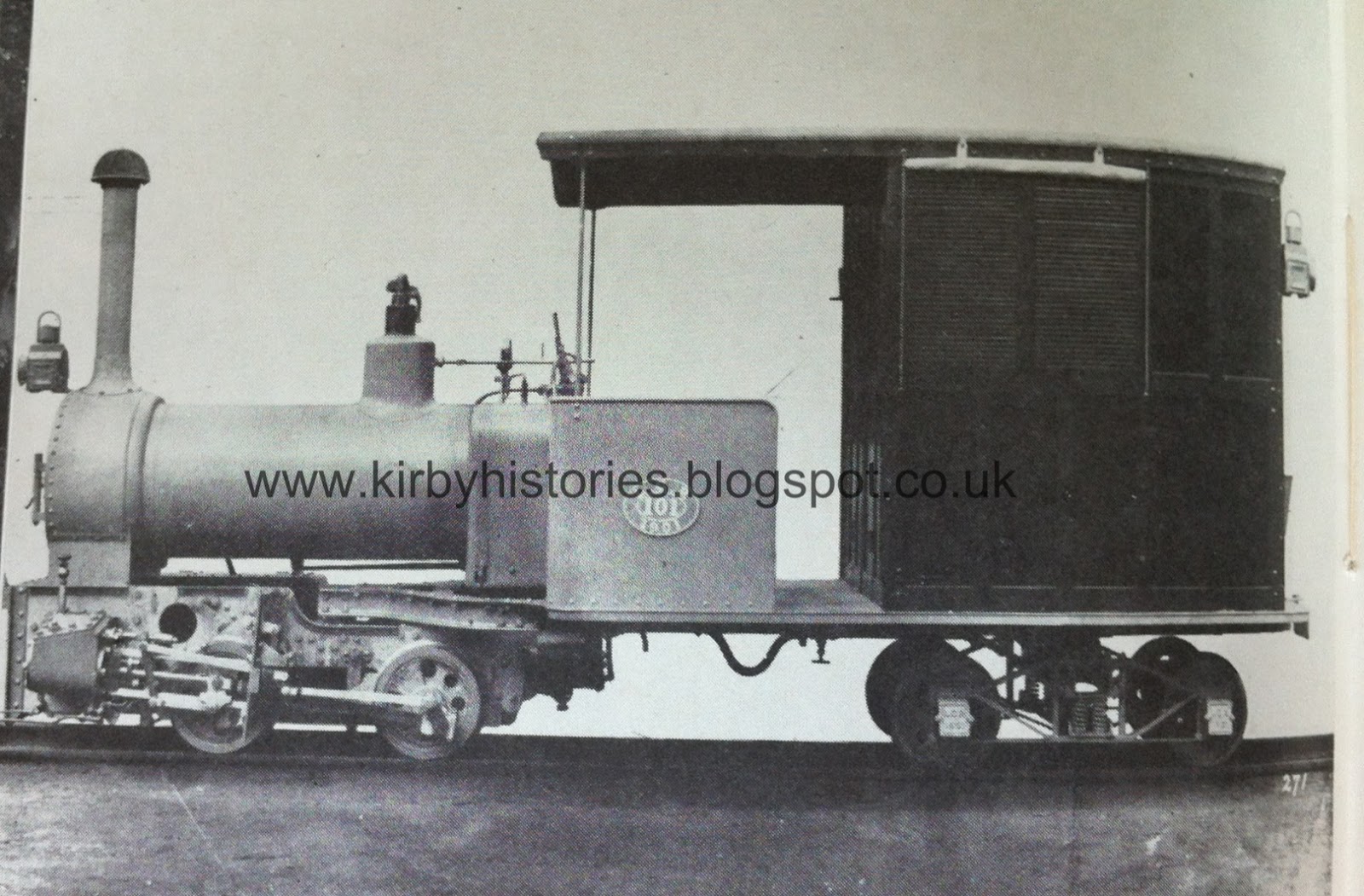
Lagos Steam Tramways

Kokomaiko (1907) delivered for the sanitary line

First of a batch of five passenger and good locomotives

The Lagos steam tramways was planned to serve three main purposes. Firstly as a link  for travellers and merchandise between Lagos Island and the railway terminus on the mainland at Iddo. Secondly, as a means of conveying passengers before the advent of popular public transport on Lagos Island. Thirdly, and its final phase as a sanitary railway.

In 1885 the lagos Government Railway had established itself on Iddo and slowly forced its winding way northways with Ibadan, 123 miles away, as its primary objective.

Formal opening took place on the 4th of March 1901, the first General Manager being Mr Bedford Glasien, C.M.G, appointed on the 8th April of the same year.

Five years before this work had commenced on a bridge to connect Lagos Island with Iddo. The length of the bridge was 2,110 feet. There was a swing type centre span 123 long and when this was opened for the passage of a river vessels the operation took more than an hour, during which time road traffic was at a standstill and Lagos water supply was cut off!
None the less it was described as probably the largest engineering work in west Africa, justifiably at the time.


By 1901 It had been decided that the Tramway should extend over Carter Bridge to the Railway terminus at Iddo, an obvious necessity for the conveyance of passengers to and from the terminus and Lagos Island and particularly for the carriage of produce to the wharves, merchandise and stores in the opposite direction before the advent of proper roads and road transport.

Tram passes over old Carter Bridge c1907


Construction of the line commenced in 1901 and formal public opening took place in May 1902, but no sooner was the line operating then it was beset with misfortune which was described in the colonial report of that year:
The closure of Carter Bridge, owing to importand and necessary repairs, prevented access to the railway terminus at Iddo, and detracted from the full value of the tramway service, which had, in consequence, to be confined to Lagos town. The Tramcars are, however, being increasingly used in Lagos itself, and ought hereafter to prove a great public convenience. (CR1902)

The Lagos Government Railway was made responsible for the construction, operation and maintenance of the Tramway.

The line as originally laid commenced at Kokomaiko on the Marina opposite  the Chief Secretarys residence (as of 1958 but in 1902 it was the the Botanical Gardens) and ran along the water front in a northerly direction as far as customs wharf where it turned east up Balogun Street then into Ereko Street and over Old Carter Bridge via Ashogbon street to Iddo.
Picture of passenger and good trains passing on Marina


In a 1958 letter written by Archdeacon G, Burton who lived at Owo, he says:
I landed in Lagos on November 11th 1907 and I remember, I travelled to Iddo Station on the old Steam Tramway at a cost of 2d. I joined the line somewhere near the present ferry terminus (opposite Bishops Court). It ran along the Marina on the Lagoon side until it reached the customs sheds then turned at right angles up Balogun street and then proceeded to the Carte Bridge and Iddo Station.
It was a very great convenience in pre motor days. It was of course very slow, but it eventually got you to the station in reasonable comfort.
The fares were: Kokomaiko to Iddo, 3d; Christ Church to Iddo 2d; and Ereko to Iddo 1d.

One familiar figure often seen in the tramcar riding to and fro, obviously for pleasure, was a big man with a stick. He was a worthy man and very impressive, The owner of Manchester House ( Now part of Marina end of Kingsway Stores) he was Zaccheus Archibald Williams, grandfather of Chief Rotimi Williams.
Details of track lay out at Customs Wharf 1911